

"Laws are silent in times of war."
Latest:   

By

Most wars are imagined as a fight between groups with fixed goals and identities – good and evil in the Hollywood version. But in reality wars are often when goals, identities, and the very basis of state authority transform. It can mean the irreversible destruction of national bonds, or the shared sacrifice that creates a new kind of patriotism.

In 1861, a group of Northern states fought a confederacy in the South and emerged with a very different understanding of federal power and what it meant to be American. Even geography in a union connected with more rail and more soldiers traversing a large country took on new meaning. The victory saved the Union between North and South, but it also created the political will to pass the 13th, 14th, and 15th amendments that constituted America’s second founding, not as these United States, but as the United States. Lincoln, and then the congressional Republicans, ensured that the political confrontation would have a lasting impact in law.

The possibility that Iraq’s civil war would transform a nation was slim from the start. Narratives of Shia martyrdom and rugged Kurdish resiliency in the face of brutal regime oppression offered little to Sunnis who might have welcomed Saddam’s downfall. Islamism and secularism were thrown together in public life after decades of mutual disgust from a distance. And the state itself was little more than a pyramid of fear and personal loyalties with Saddam at the top.

Perhaps most fatefully, it was the United States that unleashed these forces, and – in one of many cruel ironies of the war – the United States that seemed most willing to take bold action to rein them in. Often overlooked is that when bold action did come from Iraqi leaders, it was within separate intra-sectarian struggles where the U.S. could identify the moderate elements and throw its military power behind them. Victorious Sunni Sahwa fighters and an emboldened Prime Minister Maliki were both the product of the surge’s military success. But two separate military successes cannot found a nation.

The failure was not because those who claimed Iraq was an artificial construct of three sectarian sub-states from the Ottoman Empire were right, and those who stressed a legacy of nationalism that fueled the 1958 Revolution were wrong. In fact, it is hard to interpret the 2010 election as anything less than a triumph of nationalism. Ayad Allawi was never a sectarian candidate, and Maliki, in a more unlikely role, had won Shia votes by running on security and a unified “State of Law” at the expense of the Sadrists and especially the Islamic Supreme Council of Iraq – a party that would have had a more difficult time tuning its message to a public tired of religious parties.

But the war to that point and the revealing election did little to alter the kinds of commitments leaders and followers would have to each other and to the state. In a long functioning democracy, leaders often feel they owe some of their legitimacy as rulers to those who did not vote for them. At the very least, these leaders might believe they can win over some of those voters in the next election. Citizens who did vote for the winner might cry foul if their fellow countrymen were punished just for backing the wrong guy. But authority in Iraq has never been derived from public accountability in this way. Political bloc leaders are not expected to justify every decision to their constituents – power rests less on public instruments of patronage and loyalty (wasta, not speeches) – and certainly not outside their constituencies.


Crucible of War

No one should expect these patterns of political power to disappear overnight, and it would in any case be hard to completely separate the political pathologies from cultural virtues of honor and blood bonds. Civil wars, however, are almost uniquely the environment where new politics can be fashioned out of authentic cultural cloth (peaceful social movements are a much more welcome but weaker exception to this claim). It’s just that Iraq’s civil war has not yet been one of them. In 2009, with Al-Qaeda in Iraq on the run and the Jaish Al-Mahdi fractured and in retreat, the U.S. began to withdraw, in presence and commitment. Their gift was a Sunni community reconciled to a more humble place in the state. But as concrete barriers were removed, all Maliki saw was another threatening army. He went on the offensive and his fears became a self-fulfilling prophecy.

If there is one concrete element to Abadi’s war strategy that can facilitate this, it is to be bold and creative in finding Sunni leaders that have credibility among their local constituencies, even (or especially) if they are not part of the political class, and empower them with the state’s authority to fight ISIS.

Abadi’s government, if it is formed, will have to confront ISIS and he has willing backers in the U.S. and Iran. Success on the current track would be if these military powers along with the Shia-dominated Iraqi army and Kurdish forces weaken ISIS enough so that local Sunni forces, organized around tribe, can root them out of towns and cities. The situation might look something like 2008, when Maliki had to consider how to deal with the Sahwa. But with the benefit of hindsight, Haider al-Abadi and the tribes may find federalization a more mutually beneficial arrangement than full integration. Given where things stand, it would be a good outcome.

But unless there is a regional reversal of the broader sectarian war, such an uneasy federal equilibrium – that would necessarily rest on a non-credible pledge to share oil wealth – promises to eventually come undone again. The only other, albeit unlikely, path is if the crucible of war demonstrates that each community can share in a sacrifice for the nation, that there is a broad range of theological differences that aren’t existentially incompatible (whereas ISIS is), and that the legitimacy of the commander in chief will in the future be tied to defending against any threat to that identity and those values. These transformations are not choices that either a people or leader make, but experiences that they go through together. If there is one concrete element to Abadi’s war strategy that can facilitate this, it is to be bold and creative in finding Sunni leaders that have credibility among their local constituencies, even (or especially) if they are not part of the political class, and empower them with the state’s authority to fight ISIS. Taking advantage of U.S. airstrikes, he will have to link military and political progress and exercise that most rare and crucial of leadership traits – judging character rather than just loyalty in the Sunni and Shia commanders he entrusts. He will have to believe and convince other Shia leaders, that extending this hand is in their self-interest: not a naïve departure from the path of Shia ascendency but a rational move to stabilize Iraq without an indefinite threat outside Baghdad’s gates.


The Impossible Dream?

It is perhaps an impossible task. It requires more than an allocation of coercive power and material reward among ethno-sectarian communities in a federal or power-sharing arrangement. Identity – which group individuals care about – and beliefs about legitimate authority shape how citizens perceive the justice of constitutional arrangements, and thus their sustainability. Regularizing the distribution of revenue through law and settling the federal distribution of authority will be fleeting political deals until politics takes on the features of a shared plan of, by, and for Iraqis.

The American analogy can, of course, only be taken so far. Ethnic and sectarian wars are especially vulnerable to vicious cycles of violence and divisive social identities. The impact of eleven years of war and displacement – after living under Saddam – on the extended families that form the basis of social order is hard to fathom. But the conundrum Lincoln faced was one that every founder must confront: How to use military strategy to build a political identity that, in turn, gives the military the honor that is its greatest resource. Lincoln generated this power by timing the Emancipation Proclamation and later his push for the 13th Amendment to take advantage of military progress. These political moves, in turn, reinvigorated the war’s sense of purpose – that to save the Union was to preserve the meaning of freedom for all Americans.

Iraq’s history is not devoid of such moments. The 1920 and 1958 Revolutions (and even the 1941 coup) were inspired by calls for Iraqis to reclaim their country. But all three drew their legitimacy from the easier case of rejecting foreign tainted powers, and with the exception of 1958, were defeats. Even 1958 was a victory for the educated urban nationalists, but did little to build an identity that included the rural tribes and recent urban arrivals. The event itself – brutal murders of the royal family – are hardly a legend of valor to serve as an example to the humble servants of a nation. Triumph did not translate to a new nation-building project in politics or society.

ISIS and the broader sectarian war are regional challenges, but external remedies cannot reconstitute the nation. The task is more difficult than rallying the nation against an external threat, but the impact would be greater. Abadi will need military progress and sectarian de-escalation to create space for political action. But such action to constitutionally define where Iraq is headed must be a part of, rather than a result of, the war. If Iraq has any chance of emerging on the other side, Iraqis will have to believe that they faced this dark moment together and for a purpose that they shared.


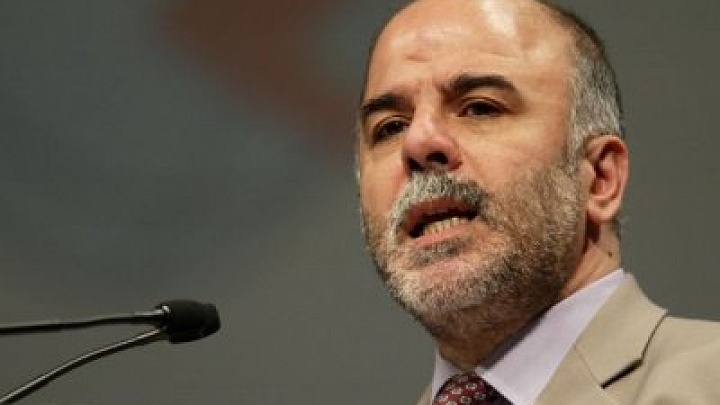
[Photo of Haider al-Abadi above: Getty Images]

FacebookTwitterGoogle+Print
Tags:
About the Author

Kevin Russell is currently a Political Science PhD candidate at Yale University, focusing on constitutional transitions and development of rule of law in the fields of comparative politics and political theory. From 2008 to 2009, he was the governance advisor on a State Department Provincial Reconstruction Team in Taji, Iraq. From 2004 to 2008, he worked in the Office of the Secretary of Defense (OSD), primarily in the Iraq Policy office.


Leave a Reply