

"Laws are silent in times of war."
Latest:   

Our Natural Bedfellows in Tehran

April 2, 2015 at 5:25 pm  •  0 Comments

By

The U.S. has never been very good on where, when or whether to intervene or not in conflicts based on intercultural subtleties. Even now, Washington is weakening its hand with Iran at the nuclear bargaining table as it bombs the Iraqi city of Tikrit, where Iranian-backed Shiite militias fighting against ISIS have put their assault on hold in protest of U.S. airstrikes. Simultaneously, the U.S. is backing Iran’s regional nemesis, Saudi Arabia, in its fight against Iranian-backed Houthi rebels in Yemen.

What’s missing here is the tacit understanding that the U.S. needs Iranian support now more than ever given its growing web of policy conundrums in the region. Houthis in Yemen may upset Saudi Arabia and Egypt, but at the risk of sounding glib, they’ll always be there for us, and vice versa. Houthis, no matter what our allies may tell us, are the least of the bad options in Yemen. Houthis fight Al-Qaeda, detest ISIS, and even offered a power sharing agreement with Yemen’s president as they marched on the capital in January. Fighting against their inclusion in Yemen will do nothing but anger Iran and the Houthis themselves, who could arguably become a useful ally in the region; the U.S. has maintained worse bedfellows before in the name of foreign policy realism.

In Iraq, Iran knows the landscape far better than the U.S., has a better military and intelligence basis for operations there, and is capable of taking care of the ISIS problem on its own. Frankly, the U.S. is scared that it will lose its share of the power puzzle to Iran; a legitimate fear for any major power. However, if American leadership closes a nuclear deal with Iran, then our Persian adversary will become more powerful and wield more influence in the region anyway as its economic situation improves and its international pariah status begins to fade. By mucking up Iranian-backed operations in Tikrit and opposing the Houthi movement in Yemen, we’re literally fighting against our own regional policy prerogatives.

But lest we forget, there are establishment-types in Iran’s government and military as well. The conservatives in Tehran and Qom -Iran’s holiest city that churns out its most scholarly, and arguably most conservative, Shiite leaders- are opposed to a deal with the West on Iran’s nuclear program. But they have at least had the brains to maintain lockstep with Ayatollah Khamenei, who is in favor of the talks and Iran’s position at the bargaining table. The irony that the nation touted as the most reptilian of our adversaries is actually genuinely working towards nuclear reconciliation while the American Congress can barely sit in the same room together should not be lost.

The reason we’re so incapable of playing both sides against the middle -the overly simplistic goal of the realist foreign policy paradigm- is because we’re relying on long-term old guard types to steer the ship while we have new school leadership in the oval office who seems too timid to make a decisive move one way or another. It’s not entirely his fault, but in this game, that isn’t an excuse for not taking an active stance against the broken status quo. It’s unfathomable that there aren’t a few thinkers among President Obama’s advisers who have brought these issues to the fore; it’s completely fathomable that he chose to ignore them.

The irony that the nation touted as the most reptilian of our adversaries is actually genuinely working towards nuclear reconciliation while the American Congress can barely sit in the same room together should not be lost.

But it’s not just the U.S. that has a problem with toxic groupthink. Cuba was an adversary of ours for far too long based on a dead Cold War mentality that the brothers Castro unnecessarily hamstrung their nation with until only recently. Russia is still playing the Cold War card as well with Ukraine, a strategy that is leading the nation’s economy right into the gutter. Israel, a supposedly democratic nation that treats an enormous minority of its citizens as though they don’t belong is no modern day hero of progressive political inquiry.

These are only a handful of the most recognizable examples of traditional thinking that are getting the global community absolutely nowhere together. It’s amazing to think that those who championed globalization as a catalyst for universal intercultural connectivity could have been wrong simply because a few closed-minded people in power refuse to foster new ideas.

Let’s be clear: When the chips fall, America is still far better positioned to be a global leader than any other nation. But at times, our foreign policy choices have had drastic, long-term, and often times horrific effects on those they touch. One doesn’t have to look hard to see how the American military adventure in Iraq in 2003 or the ramshackle attempt at nation building in Afghanistan have caused unintentional suffering among their respective populations. We must move away from half-baked approaches to policy that uses pinches of liberal ideals with heaping spoons of realism interspersed. If not, we’ll get nowhere while pushing others down in the process.

This means we must work hand in hand with the Iranians, whether we agree with their values or not. Iran will never see things through American eyes, it will never adopt our way of life, and there’s nothing wrong with that. Iran is different from America, as are other nations, but this should not keep us from working with them when it serves us to do so and working against them when it doesn’t. Right now, it makes far more sense to quietly admit our tacit weakness in the region and support Iran’s work in Iraq to rid it of a mutual problem. It also makes sense to allow Houthis a seat at the table in Yemen while reassuring Saudi Arabia through the process. The old guard in Congress will say that such moves are weak and ultimately diminish our role in the region. I refer those lawmakers to Joint Special Operations Command for that conversation.

No country on earth is truly foolish enough to take on American military superiority, and for that reason alone, diplomatic strategy realignment is our most important project, while we still have time to hone the craft.

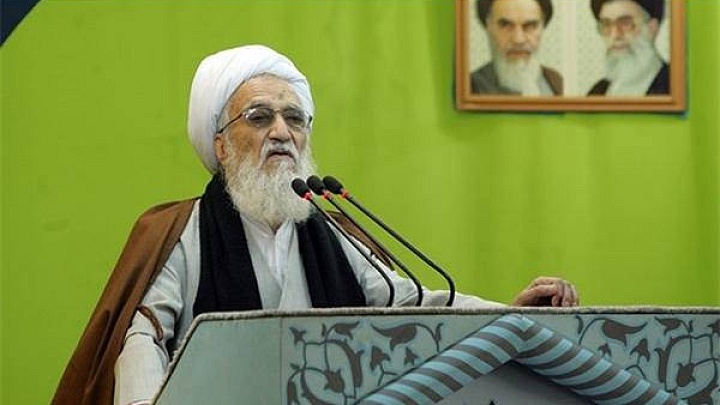
[Photo of Yemeni cleric. Source: Flickr Creative Commons]

FacebookTwitterGoogle+Print
Tags:
About the Author

Joseph Sarkisian is a policy analyst under private contract and frequent contributor to a number of online publications. He received his MSc International Relations at Umass Boston, taught U.S. foreign policy in the Middle East, and primarily focuses on U.S.-Iranian relations. He previously lived in Egypt where he studied Arabic at the American University in Cairo. His main areas of interest are Afghanistan, Pakistan, Iran, and Syria.


Leave a Reply